

|
|
|
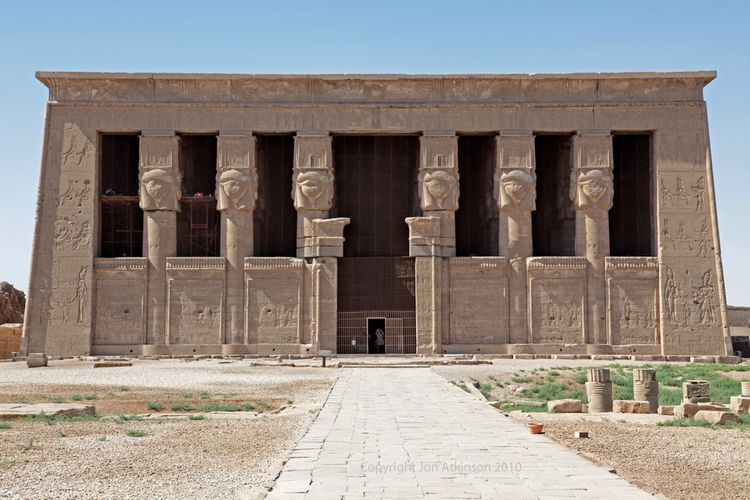
Dendera 1 - The Temple of Hathor: The temple looks like those found at Karnak and Luxor but is a much later building built between 30 BC and 14 AD. The main pylon has six enormous Hathor-headed columns and is covered in reliefs of the Roman emperors. |
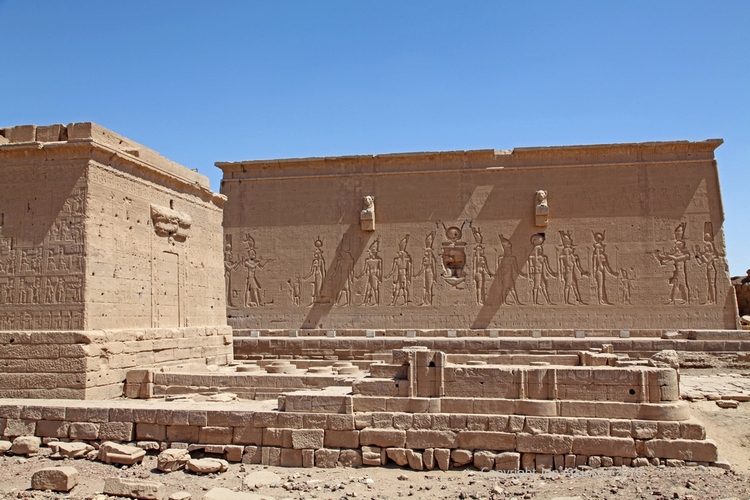
Dendera 2 - The Temple of Hathor (rear view): The present structure dates to the Greek and Roman periods, with the sanctuary and its surrounding chapels built by the later Ptolemies in the 1st century. |
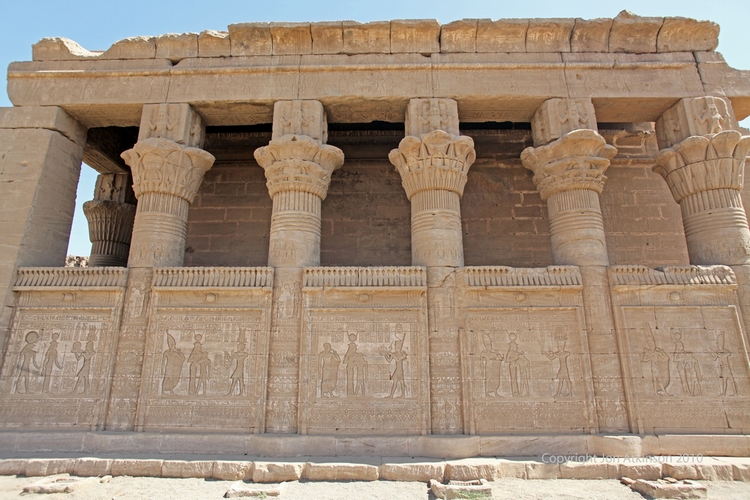
Dendera 3 - Birth house of Mammisi: The Birth house of Mammisi is the earliest surviving building. It dates from the reign of Nectanebo I (380 - 362 BC). It was built by the Romans to replace a previous temple build by Nectaneba in the 30th Dynasty. The composite capitals of the columns carry high pillars with Bes figures. |
|
|
|
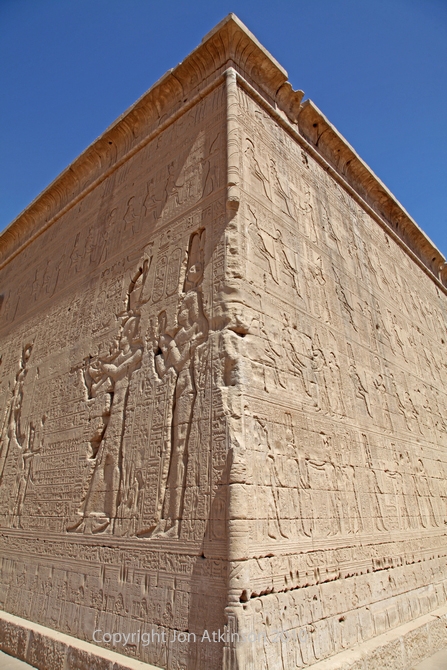
Dendera 4 - The Temple of Hathor (corner view): View from the rear corner of the Temple of Hathor highlighting the reliefs on the side and rear wall.
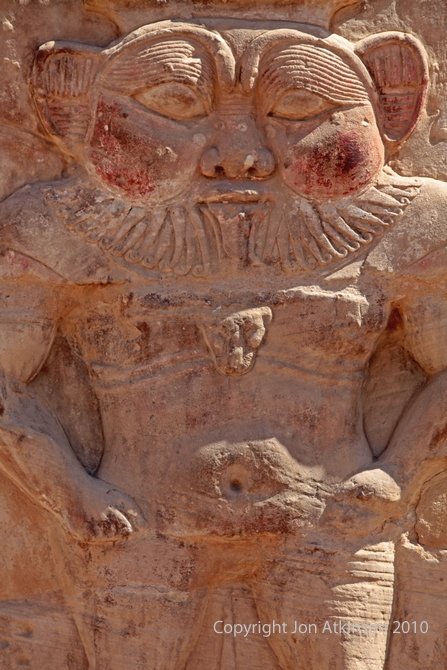
| Dendera 5 - Bes, Dendera: Bes at the Temple of Hathor, Dendera. The grotesque appearance of this dwarf god was thought to ward off evil spirits at the moment of birth. |
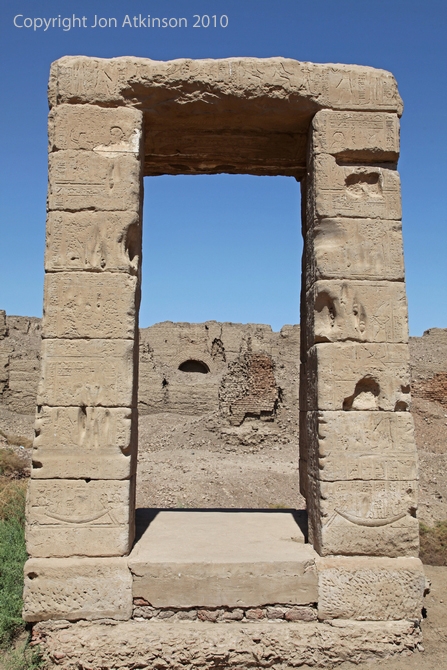
Dendera 6 - Dendera Complex: The whole complex covers some 40,000 square meters and is surrounded by a hefty mud brick enclosed wall.
|
|
|
|
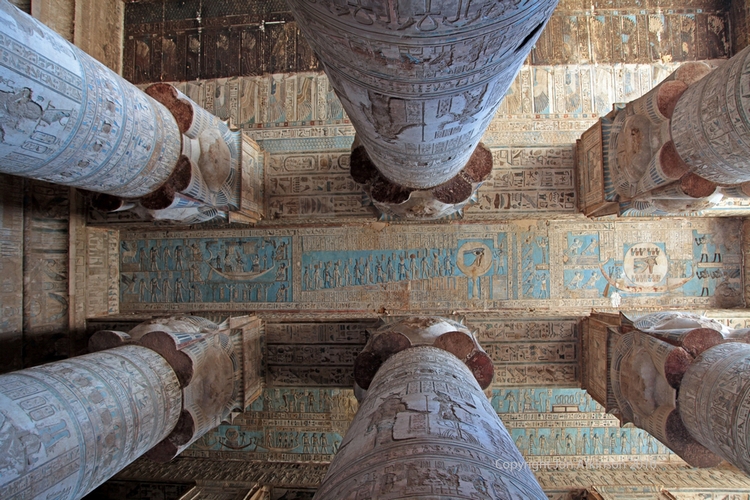
Dendera 8 - Hypostyle Hall: The hypostyle hall was built in the first century AD by the Roman Emperor Tiberius. great Hypostyle Hall by the Romans in the 1st century AD. Dendera was the chief place for the worship of Hathor. |
Dendera 9 - Ceiling, Hypostyle Hall, Temple of Hathor: Whilst the Temple of Hathor was built in the 1st century B.C later, Roman Emperors continued to decorate it and honor the Goddess Hathor; the Goddess of maternity, love and music. The Greeks identified the Goddess Hathor as Aphrodite. |
|
|
|
|
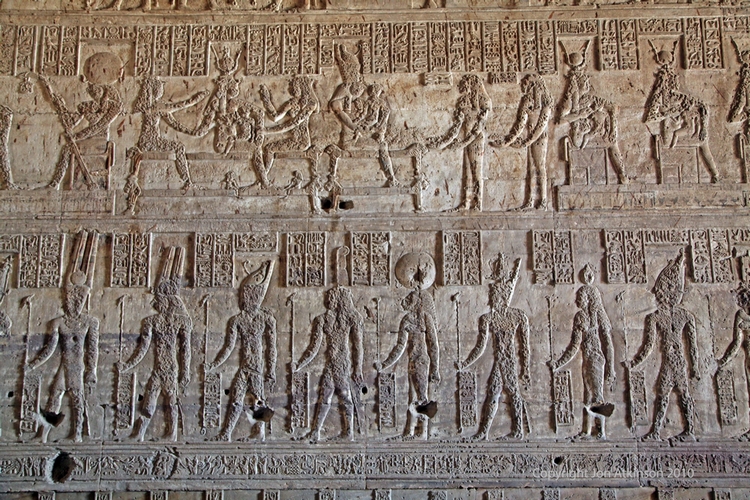
Dendera 10 - Damaged reliefs, Temple of Hathor: The reliefs are generally well preserved except for some that were damaged by early Christians. |
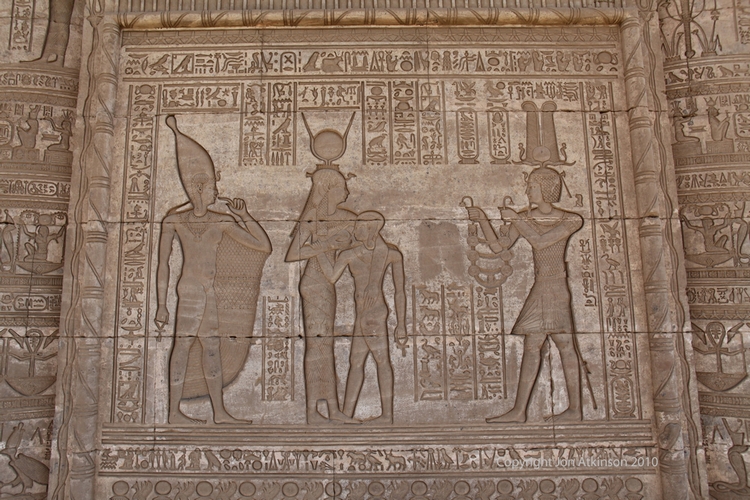
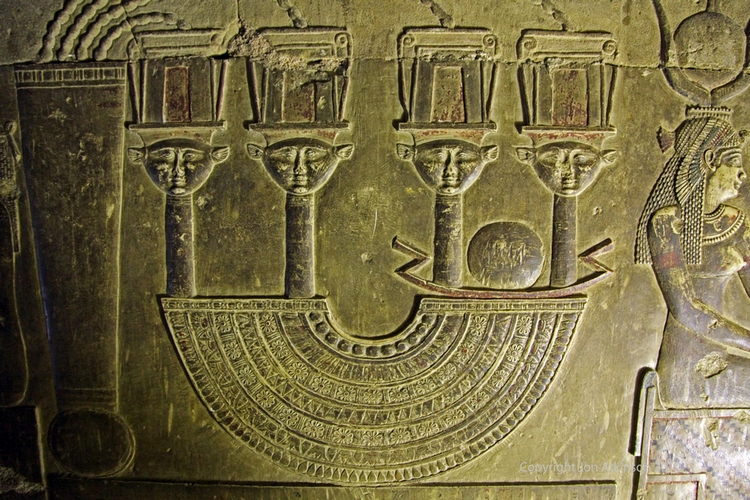
Dendera 11 - Relief on the wall of "Birth house of Mammisi: The relief scenes depict Trajan, Augustus' later successor, making offerings to Hathor, and are among the finest to be found in Egypt.The walls contain images of Hathor suckling a child and images of Hathor in the form of a cow. |
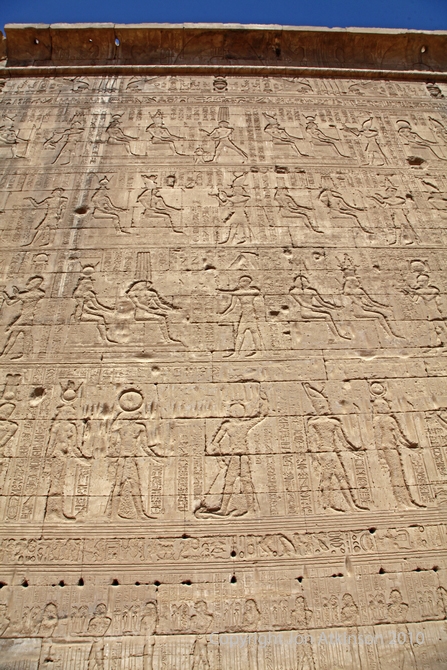
Dendera 12 - Reliefs on rear of Temple of Hathor: Reliefs depict the royal figures of Cleopatra VII with her son Caesarion who was her co-regent before the Roman era. |
|
|
|
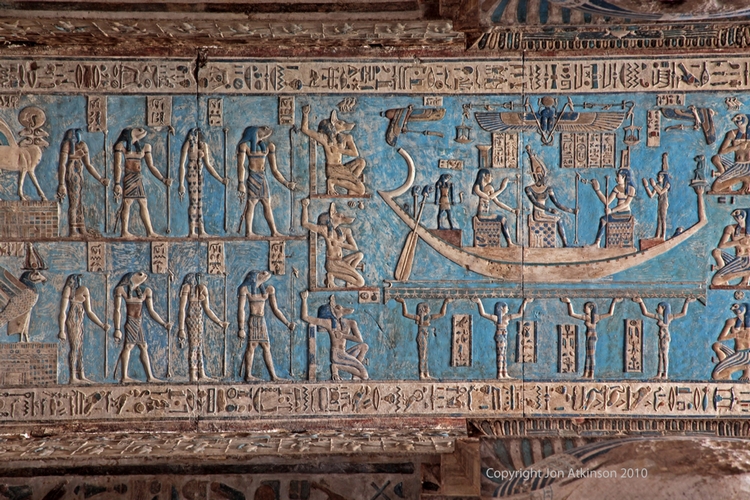
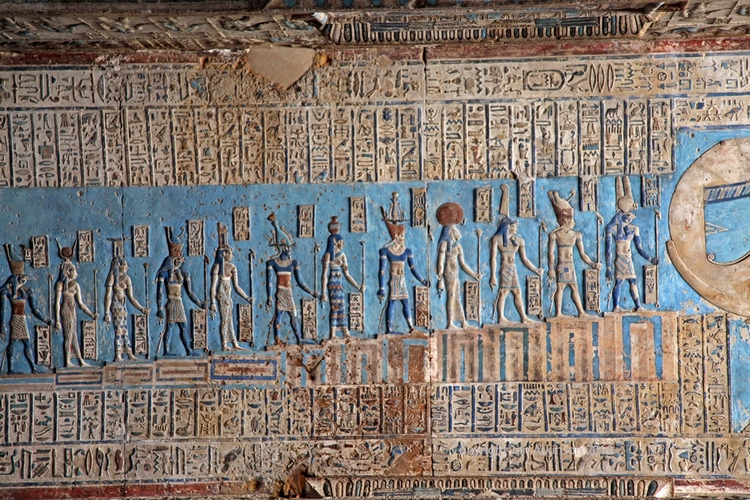
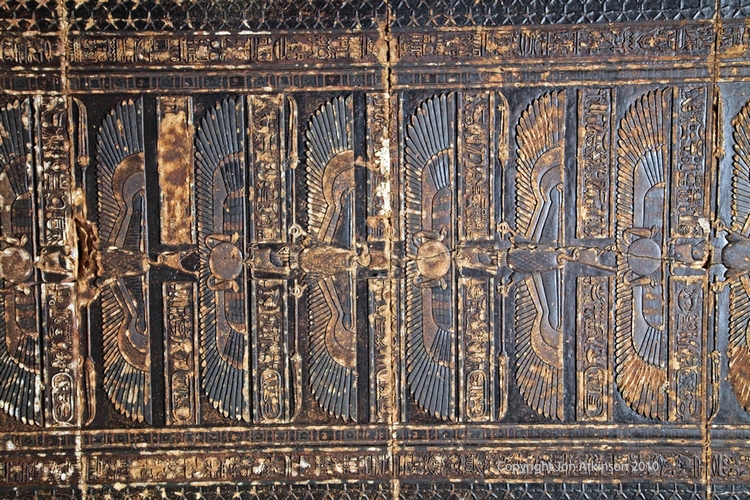
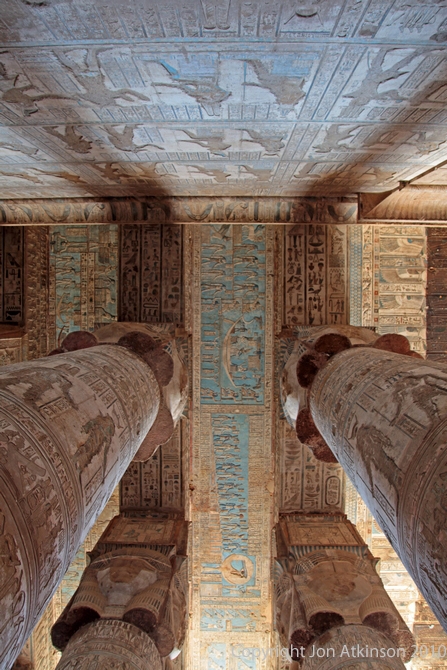
Dendera 13 - Ornate Ceiling, Hypostyle Hall, Temple of Hathor: The ceiling of this hall retains much of its original color. It is decorated as a complex and carefully aligned symbolic chart of the heavens, including signs of the zodiac. |
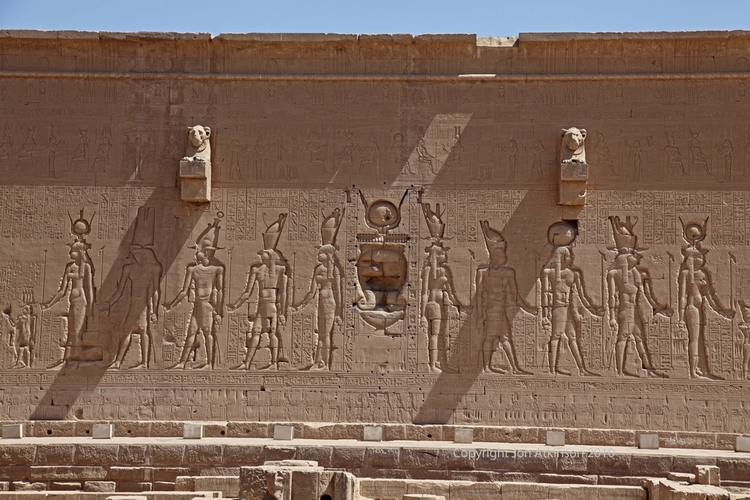
Dendera 14 - Reliefs on the side of Temple of Hathor: View of the reliefs on the side of Temple of Hathor, Dendera. |
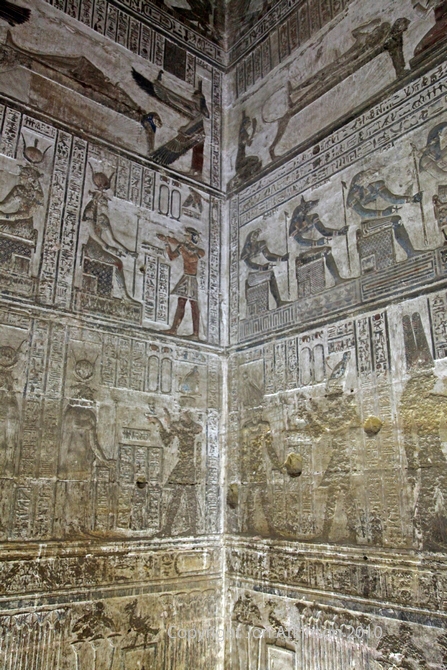
Dendera 15 - Internal reliefs in the Temple of Hathor: In the last room, one sees, carefully carved on the Southern wall, a falcon with detailed feathers, preceded by a snake emerging from a lotus blossom within a boat. |
|
|
|
Dendera 16 - Walls of Crypt in Temple of Hathor: The Temple of Hathor at Dendera contains a number of small crypts along the eastern, southern, and western sides. These crypts are thought to have served as warehouses or treasuries for ritual furnishings, sacred and ceremonial equipment, and divine images used in celebrating various feasts and holidays. |
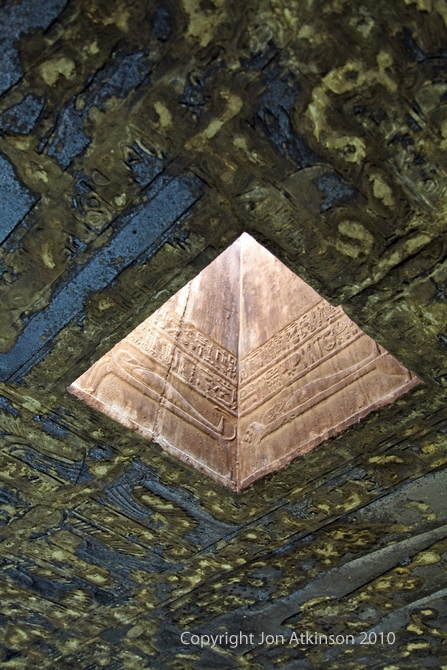
Dendera 17 - Ceiling light, Temple of Hathor, Dendera: A sanctuary on the top floor has a fabulous ceiling of Mut stretched out over the world. An ornate decorate shaft provides illumination into the chamber.The zodiac here is a copy - the original was stolen and is in the Louvre in Paris. |
Dendera 18 - Hypostyle Hall: The ceiling of the first hypostyle hall is of particular interest, divided into 7 bands of well-preserved astronomical figures featuring the goddess Nut, vultures and winged sun-discs and the Roman signs of the zodiac. |
